In the previous part, I shared some critical principles we can learn from Jesus Christ about building a God-given idea. Solomon was also one of the most renowned builders in the Bible, and his experience offers us important spiritual and practical insights.
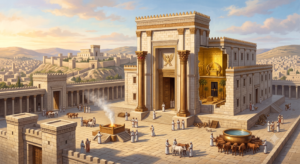
One of Solomon’s greatest accomplishments was building the Temple, which is one of the most significant and magnificent structures recorded in Scripture. 1 Kings 6 gives us a detailed account of its construction. The Temple was approximately ninety feet long, thirty feet wide and forty-five feet high. It had recessed windows, multiple side rooms and a three-storey complex built around its outer walls.
The interior was equally remarkable: Solomon overlaid it with pure gold, including the altar belonging to the Most Holy Place (1 Kings 6:2–6, 21–22). I would advise that you read the whole of 1 Kings 6.
The Temple was a magnificent and highly advanced piece of architecture for Solomon’s time. Such an extraordinary undertaking required more than human intelligence, skill or ambition. It could only have been accomplished through reliance on God, obedience to His instructions and the grace He supplied.
The Origin of the Idea
To understand Solomon’s success, we must first consider where the idea came from.
David desired to build a house for God, but God told him that he would not be the one to build it. Instead, his son Solomon, who would succeed him as king, would accomplish the work (2 Samuel 7). God placed the vision in David’s heart, but He gave Solomon the mandate, power and resources to bring it to life. The idea ultimately came from God.
There is an important principle here. Sometimes, God may place an idea or vision in another person’s heart and allow that person to share it with you. He may then entrust you with the responsibility of bringing it to life, while supplying the wisdom, power and resources you need; just as He did with Solomon.
David received the vision, but Solomon received the assignment to build.
This teaches us that we should not reject an idea simply because it did not originate in our own minds. When an idea comes from God, He may use one person to conceive it, another to communicate it and another to bring it into physical manifestation. What matters is discerning God’s will, understanding your role and obeying His instructions.
The Gift Needed to Build
Before Solomon began building the Temple, however, he had a personal encounter with God. In 1 Kings 3, Solomon offered sacrifices to God, and God appeared to him. During that encounter, Solomon asked for an understanding heart so that he could govern God’s people wisely. God responded by giving him extraordinary wisdom.
This reveals another important principle: certain spiritual gifts may be necessary for building a God-given idea.
Solomon needed the gift of wisdom because, as Proverbs 24:3 teaches, a house is built through wisdom and established through understanding. Wisdom is the ability to make sound judgments and decisions by correctly applying knowledge, experience and deep insight.
For Solomon, wisdom was not merely a natural ability; it was a supernatural gift from God that equipped him for his divine assignment.
In the same way, every God-given idea carries its own spiritual demands. One person may need unusual wisdom. Another may need faith, discernment, courage, patience, creativity, leadership or the ability to work with people. Whatever the assignment requires, God is able to supply it.
The Spiritual Comes First
We also learn from Solomon that the spiritual comes first. Before he started building, he sought God. He offered sacrifices, prayed and had an encounter with Him. His preparation did not begin at the construction site; it began in the presence of God.
This is consistent with the instruction in Matthew 6:33 to seek first the Kingdom of God and His righteousness. Solomon sought God, and through that encounter, he received the supernatural gift he needed to fulfil his assignment.
Many people want to begin with plans, resources, connections and physical activity. These things are important, but when the idea comes from God, our first responsibility is to seek Him.
In His presence, we receive direction. Through prayer, we gain clarity. Through obedience, we are positioned to receive the grace and spiritual gifts required for the work.
Prayer and a close relationship with God are therefore not optional when building a God-given idea; they are critical. God does not merely give the idea, He also supplies the wisdom, grace, power and resources required to bring it to fulfilment.
God-Enabled Partnerships
The next step Solomon took when he was ready to build the house of the Lord was to partner with Hiram, king of Tyre. Solomon shared his plans for the Temple with Hiram, and God gave him favour in the king’s sight. As a result, Hiram agreed to Solomon’s requests.
Solomon asked for skilled Sidonian labourers who knew how to cut timber. He also requested materials such as cedar and cypress logs. This was a partnership that God enabled and favoured.
Solomon was willing to look beyond his immediate circle for the best people and resources for the work. Some ideas will require the help of people outside your familiar environment. You can read more about their partnership in 1 Kings 5.
Choosing the Right Team
Solomon also raised a workforce from Israel and appointed the right leaders to oversee the project. The people you appoint to work on your God-given idea are very important. They can determine how far the project will go.
This connects with what I wrote in Part 4,Dream Team or Kill Team. I encourage you to read it.
Solomon also appointed Huram, a craftsman from Tyre who was filled with wisdom, understanding and skill in working with bronze (1 Kings 7:13–14). Solomon was intentional about the team he selected for the project. You cannot take skill away from the building of a God-given idea. Spirituality does not remove the need for competence.
The Importance of Diligence
Solomon also understood the importance of diligence. In Proverbs 22:29, he teaches that a diligent person will stand before kings. Diligence is the steady, careful and persistent effort applied to a task or responsibility.
When you consider the attention Solomon gave to the Temple, you can see the diligence with which he built it.
Diligence is necessary when building a God-given idea. Having the right people and skills is not enough. Those skills must be applied correctly, with persistence and attention to detail. This was what Solomon demonstrated in building the Temple.
Giving God the Best
Finally, let us consider the cost. I believe Solomon learnt this principle from his father, David, who refused to offer to God something that cost him nothing (2 Samuel 24:24).
Solomon used the finest and most valuable materials for the project, including high-quality wood, gold, silver and bronze. He also chose the best labourers. His mindset was that if the work was for the Lord, then the Lord deserved the best.
A Final Question
I will end with this question. If God gave you the idea, will you take the time to pray, prepare, plan and execute it to a standard that will show the world that it is truly a God-given idea?